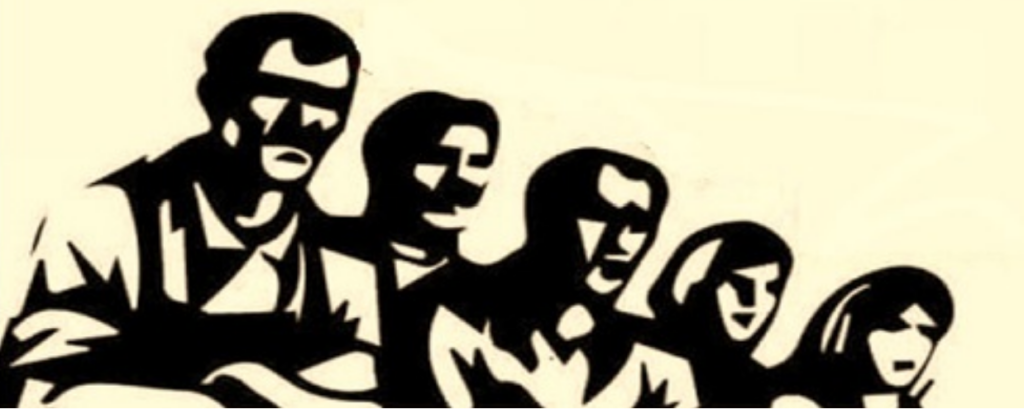




The Universal Declaration of Human Rights is one of the most important historical achievements of humanity and is based on the dignity, freedom and equality of all human beings. The preamble of this valuable document states that “recognition of the inherent dignity and worth of all members of the human family” is the basis of global peace and justice, and the first article emphasizes that “all human beings are born free and equal.”
The republic envisioned by the Organization of the People’s Fadaian of Iran(Majority) is a republic based on democracy, the separation of religion and state, social justice and human rights. On this basis, we demand an end to political and social repression, an end to criminalization and freedom of political activism, structural changes in legislation to eliminate discrimination and inequality, fundamental changes in economic policies to address the livelihood of workers and toilers, and in other words, taking steps towards ensuring citizenship rights and ensuring a life based on human dignity for all Iranian citizens.
Human rights are based on individual existence and belong to each human being from the moment of birth. Human rights are universal and not dependent on geographical, ethnic, gender, belief, religious, social, economic or political power structure.
However, the reality of today’s world is still inconsistent with these universal principles, and the implementation of these rights is subject to power relations and political and economic interests. As long as capitalism and imperialist domination on the one hand and authoritarian or autocratic governments on the other dominate global trends, as long as the global power structure is based on greater profit and exploitation and colonialism instead of justice, human rights will continue to be overshadowed by these interests.
The most fundamental basis of human rights is the right to life. The right to life means enjoying human dignity; a dignity that includes access to food, education, health, security, equal opportunities and the possibility of freely deciding on one’s individual and social destiny and eliminating all inequalities and discrimination that are the cause of the inhuman conditions of today’s world. Structural poverty, deep economic inequalities, political, ethnic and gender discrimination, and widespread wars and displacements all demonstrate that securing and guaranteeing human dignity remains an elusive dream for a large part of the world’s people. This dream can only be realized when the universality of human rights is reflected not in words but in global structures, policies and relations. Iran, one of the first signatories to this declaration, has faced profound challenges in realizing the fundamental rights of its citizens over the past 77 years. Political tyranny, class divisions, gender, ethnic and religious discrimination, and widespread restrictions on civil, social and political freedoms have prevented our citizens from living a life of human dignity. Not only was no aspect of human rights ever realized in either the Pahlavi regime or the Islamic Republic, but both regimes violated the principle of people’s sovereignty and pursued a policy of violent and organized repression, violating fundamental human rights, and practically refusing to implement their international obligations through their laws and government procedures. The 1979 Revolution, which was formed in the wake of the realization of a system based on freedom and social justice, failed to implement these ideals, and human rights violations became the basis of the structure, legislation, and policymaking of the Islamic Republic. Over the past 47 years, Iranian society has paid a heavy price to achieve freedom, social justice, and a life with human dignity. Iran’s prisons are still full of political prisoners; those whose only crime is opposing, protesting, and even criticizing the economic and social policies that have plunged our country into a major crisis. The people’s livelihoods are sinking deeper and deeper into crisis every day under the shadow of unjust and unjustifiable sanctions on the one hand, and unwise policies and structural corruption that govern the country’s economy; sanctions, corruption, and tyranny, each of which is a naked manifestation of gross violations of human rights. In such circumstances, a large part of our citizens have been deprived of achieving a life worthy of human dignity.
The commission of the crime of state murder (execution) in Iran’s contemporary history, both during the Pahlavi era and in the Islamic Republic, has continued with varying degrees of intensity and ups and downs. Iran has always been among the countries with the highest number of cases of this state murder. And even over the past two years, despite external pressures and the risk of foreign encroachment on Iranian soil once again, this trend has been on the rise.
We believe in the universality of the Universal Declaration of Human Rights and have not been and will not be indifferent to its violations on a global scale. The double standards of human rights, whether by the great imperialist powers of the West, which have shown themselves most blatantly in the great humanitarian tragedy in Gaza in recent years, or by other countries that, by clinging to religious and traditional beliefs, consider themselves free from it and make it seem irrelevant with the term Western human rights, such as our country that conceals women’s rights, are both in violations of universal human rights.
A large part of the conflicts, wars, destruction, and displacements in the world today are formed within the framework of the colonial policies of the great powers for political and economic influence. Selling weapons to the parties to the conflict, supporting regimes that violate human rights, and using war as a tool to expand influence and domination and access new markets are important factors that prevent the realization of the universal declaration of human rights. As long as exploitation and colonialism remain the standard for global policymaking, achieving the ideals of the Universal Declaration of Human Rights and living in a world based on peace, freedom, and social justice will remain a difficult and unattainable dream. Moreover, for many of the activists on this path, it will come at a heavy cost.
With this belief, we condemn the policies of warmongering, colonialism and violation of human rights and warn against the trampling of universal human rights in the pursuit of profit by great powers and their double standards with human dignity. At the same time, emphasizing the necessity of realizing human rights in the future Iran, we warn the Islamic Republic to fulfill its obligations and respect the rights of citizens. We consider fundamental changes in the crisis-ridden and corrupt economic structure, effective environmental policies, freedom of political parties and media, release of political prisoners and recognition of independent civil society and trade union activities as prerequisites for Iranians to achieve a life with human dignity and we will continue to fight to achieve these goals.
Long live the struggle to realize human rights for every human being in every part of the world!
Wednesday, 19 Azar 1404 (10 December 2025)
Political-Executive Board of the Organization of the People’s Fadaian of Iran (Majority)