


|
Getting your Trinity Audio player ready...
|
Following paper and policy brief is produced by a civil society activist group in the Netherland. We are publishing it in accordance with our policy of supporting Civil Society activism. The group’s introduction says that “Volunteer Activists is a non-profit civil society organization based in the Netherlands. We envision dynamic, inclusive, and democratic civil societies in Iran and the MENA region, representing all citizens in their efforts to build pluralistic and diverse societies and establish accountable governments.” This paper and Volunteer Activists siite can be reached at: https://www.volunteeractivists.nl/publications/iran-in-winter-2026-the-convergence-of-domestic-crises-and-external-intervention
*****
Policy Brief
Executive summary
In December 2025 and January 2026, Iran faces the simultaneous eruption of two profound political and social crises. First, a deepening crisis of governmental legitimacy and effectiveness has triggered a broad wave of nationwide protests. Second, Iran’s regional and international deterrence has been weakened following the Twelve-Day War (Iran-Israel War), placing the United States in a position where limited military intervention is now being seriously considered as a policy option.
This policy brief evaluates the potential consequences of U.S. military intervention and examines whether such action would weaken the government’s internal capacity for repression and shift the balance in favor of domestic social and political actors; or, conversely, whether it would trigger heightened securitization, short-term regime cohesion, and greater regional instability.
In conclusion, the report finds that while U.S. military intervention may yield certain short-term effects, in the absence of organizational capacity and effective political representation within the country; and without a coherent intervention strategy; it is unlikely to produce durable strategic outcomes. Instead, U.S. military intervention would likely generate harmful long-term consequences for the Iranian populations, the Iranian state, and the broader region.
Our policy recommendations emphasize restraints and strategic calibration, prioritizing non-military instruments for long-term change in Iran. For policy makers, we advocate targeted measures that raise the cost of repression without reinforcing the siege-narrative, instead of premature military intervention. This could include international legal action, facilitation of free flow of information, and empowerment of civic actors to drive change from within. For civil society actors inside Iran, we recommend strengthening decentralized and inclusive forms of organization, maintaining independence from foreign political agendas, and selectively leveraging international pressure in support of, rather than in place of, domestic capacity. Finally, for international organizations, we stress the need to move beyond the binary of intervention versus non-intervention. We recommend to closely monitor internal social dynamics, to clearly distinguish pathways to regime change from scenarios of state collapse, and to echo the voice of Iranian civic actors, who should be driving change from within Iran.
۱. Background
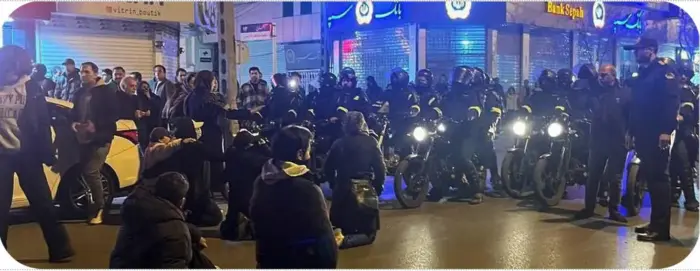
The nationwide protests that began in early January 2026 quickly moved beyond purely economic demands and escalated into a direct challenge of Iran’s political power structure. These developments cannot be reduced to a temporary reaction to livelihood pressures; rather, they signal a multi-layered structural crisis that includes:
- a chronic decline in economic performance and the gradual erosion of the middle class;
- a crisis of political legitimacy and a sustained drop in public trust in state institutions;
- generational shifts and the emergence of new modes of political action outside institutional and traditional
Within this context, the longstanding suppression of the fundamental rights to freedom of association and assembly, granted through the constitution of the Islamic Republic of Iran, has prevented the formation of durable civil society institutions capable of representing different social groups. As a result, mechanisms of social dialogue for addressing these crises have been effectively eliminated, leaving street protest as the only available pathway for social groups to advocate for their respective interests.
Facing this broad wave of social discontent, the government has continued to rely on its dominant strategy of “security patience and attritional protest management.” This approach rests on three core components: systematic disruption of communications (especially internet shutdowns), the display of coercive presence through the deployment of loyalist and security forces, and the delegitimization of protesters through official media.
In practice, the government’s response, at several key moments, has approximated a model of “maximum repression,” involving full communication blackouts and the deployment of rapid-reaction units to retake control of the streets. Although this strategy has succeeded in briefly dispersing protests, it has failed to address the underlying structural drivers of the crisis. Consequently, it has not reduced social discontent; rather, it has contributed to the emergence of more durable nodes of social resistance.
Rather than dissipating, the unresolved crisis recedes into the deeper layers of society, where accumulated grievances remain poised to erupt in response to external shocks or triggers. In this sense, the present moment retains a high potential for reproducing the current crisis and a renewed escalation in the short to medium term.
۲. Domestic and Regional Features of Protests
۲.۱ Domestic Dynamics
A notable feature of the recent protests is their simultaneous spread across major cities as well as peripheral and border regions. This development signals a narrowing of the traditional “center-periphery” divide and the emergence of social convergence at a national scale. However, harsh security crackdowns in certain areas – especially in border provinces – risk deepening social cleavages and increasing the broader costs of governance.
Organizationally, the protests suffer from structural weaknesses in leadership, coordination, and representation. While fragmentation and the lack of a clear representational framework have enhanced flexibility, they have also constrained the movement’s capacity to convert street pressure into lasting political gains.
۲.۲ International Considerations
At the international level, the United States confronts a two-fold problem in terms of policy: domestic political pressures and public resistance to new conflicts and “endless wars” coexist with concerns over deterrence credibility and the regional consequences of inaction amid widespread repression. In this setting, a “limited intervention” option has surfaced as a middle ground – aimed at risk management and signaling deterrence – advanced by
U.S. President Donald Trump.
۳. Probable Scenarios
Scenario I: Symbolic Military Targets
Under this scenario, the United States would carry out a small number of limited, low-intensity military strikes meant to send a political signal. Potential targets could include IRGC bases, logistical facilities, or segments of infrastructure linked to missile production. To enhance symbolic impact, a strike on a government building in Tehran is also possible – similar to Israel’s attack on Evin Prison during the Twelve-Day War in June of last year.
Operationally, these strikes are feasible with U.S. assets already deployed in the region; the central question concerns their “political effect.” If they are too symbolic, they risk backfiring – allowing the government to reinforce a “foreign aggression” narrative while signaling to protesters that Washington lacks the will or capacity to generate meaningful change.
Scenario II: Limited Military Intervention
In this scenario, the focus is on short but high-intensity air and cyber strikes. Potential targets include air defense systems, drone bases, and command-and-control (C2) nodes. The underlying rationale is that disrupting these communication and operational hubs would diminish the state’s ability to rapidly suppress protests.
This approach eschews ground deployment to minimize U.S. casualties while increasing psychological and operational pressure on Iran’s power structure.
Possible Effects on the Protest Movement
The intersection of foreign intervention and ongoing protest dynamics could generate reactions on three levels:
- State Response (Crisis-Led Re-legitimation)
Foreign intervention could provide the government with an opening to reconstruct its weakened social base. Through the mobilization of defensive nationalism, protests may be reframed from “justice-oriented demands” into “national threats or acts of betrayal,” thereby expanding the state’s latitude for intensified repression under the banner of national security. Signs of this dynamic are already observable: U.S. and Israeli statements alleging the presence of “Mossad agents” among protesters have been invoked domestically to legitimize greater levels of violence.
- Social Reaction (Nationalism Change)
A strategic split may emerge within society, similar to dynamics seen during the Twelve-Day War. Segments from the urban middle class – with historical, vivid memories of insecurity in Iran post revolution and more recently Syria, Iraq and Libya – may choose stability of the “existing order” over the risks of wartime disorder. In contrast, younger generations and exhausted social groups may interpret the weakening of state structures as an opportunity to further pressure the government through escalated protests.
Economic–Social Impact (Shock and Livelihood Revolts)
Even a limited strike could spark a currency shock and inflation driven by heightened uncertainty. Middle-class households would see further deterioration in assets and economic security, while peripheral urban areas would see an exacerbation of existing livelihood grievances due to the instability created by security disruptions, generating unrest that may prove difficult to contain.
Scenario III: Uncontrolled Escalation and Expanded Conflict (Escalation Spiral)
Under this scenario, even a limited strike could provoke Iranian retaliation and widen the conflict regionally – pushing national priorities toward security rather than democratic demands. If Washington’s aim was either “real change” or the “effective degradation of the repression apparatus,” a longer and broader campaign would likely be required, with higher military commitments and significant political and regional costs.
As such a campaign extends, the risk of a “rally-around-the-flag” effect increases. Should the government survive,
it could leverage such a dynamic to consolidate its position. Ultimately, it is difficult to imagine that street-level repression could be halted solely through airstrikes, since coercive control on the ground relies primarily on deployed forces, local networks, and land-based policing and security mechanisms.
Scenario IV: Targeted Leadership Removal (Decapitation Strike)
This scenario centers on the idea of “decapitating the leadership” as a means of inducing internal fractures and initiating a power struggle within the state. However, due to its unpredictable downstream effects, it is among the highest-risk options: it could intensify violence, trigger a succession crisis, undermine basic order, and expand the conflict regionally. Rather than facilitating transition, it could ultimately regenerate hard power in a new configuration.
Scenario V: Alternative Scenario – Non-Military Pressure and Indirect Deterrence
Beyond military measures, a parallel pathway relies on non-military instruments: targeted sanctions and economic containment, human-rights pressure, support for the free flow of information, and cyber tools that enable civil communication – without direct armed intervention.
Under this approach, steps such as expanding access to communication technologies, lowering the costs associated with internet shutdowns, and strengthening documentation of human-rights violations could make the repression of protests more costly for the government while avoiding the reinforcement of a “foreign siege” narrative.
In this context, on January 12, President Donald Trump introduced a 25 percent trade tariff on countries conducting commercial exchange with Iran, signalling the onset of this mode of pressure. However, the effect of this measure remains to be seen considering Iran is already one of the most economically sanctioned countries in the world.
۴. Rapid Strategic Assessment
۴.۱ Domestic Risks
- Strengthening the “Foreign Threat” Narrative and the Rally-Around-the-Flag Effect
In the event of military action, or even a credible threat of military action, the government can shift the political framing of the current situation away from a “governance crisis” toward one of “sacred national defense.” This discursive shift typically reduces intra-elite fractures, increases institutional cohesion, and mobilizes segments of public opinion around the necessity of “stability.” The resulting effect is a contraction of civic space and a reduced political cost of repression.
- Legitimizing Wider Repression Under the Banner of National Security and Territorial Integrity
Foreign intervention – particularly when coupled with security disruptions or cyberattacks – enables the state to reframe coercive measures as “counter-espionage” or “counter-terrorism” operations. These measures may include mass arrests, expanded street controls, internet restrictions, and even the use of heavy weaponry in protest centers. Under such framing, the line between civil action and security threat is deliberately obscured, increasing the human cost of protest.
- Erosion of Social Cohesion and Polarization Within the Protest Movement
External intervention can deepen internal “bifurcation” (polarization) within society and within the protest movement. Thus,
- some segments may view any external pressure as a threat to territorial integrity and grow cautious about sustained protests;
- others may interpret intervention as an opportunity to fracture the repression
This divide erodes the cohesion of political messaging, limits the possibility of broad national coalitions, and renders organizational capacity more fragile.
- Increased Miscalculation and the Radicalization of Violence Dynamics
In crisis conditions, the introduction of an external variable can lead to strategic “miscalculations” by domestic actors. Thus,
- the government may conclude that escalation of repression is the only viable path to survival;
- protesters may overestimate external effects or pursue higher-cost
Such dynamics can heighten violence, raise casualties, and diminish the prospects for a controlled transition.
- Risk of Transition from Regime Change to State Collapse
One of the most significant strategic risks is the transformation of a “regime change” scenario into one of “state collapse” and administrative disintegration. This becomes more likely, if:
- command-and-control (C2) infrastructures are disrupted;
- the security-administrative decision-making chain is weakened;
- state financial resources deteriorate; and
- there is neither an organizational nor institutional alternative for maintaining public
State collapse could produce fragmented territorial authority, the rise of non-state armed actors, heightened urban insecurity, and the emergence of “parallel governance nodes.” Even if it weakens the central state, such an outcome does not necessarily yield democratic transition. Instead, it may generate a protracted crisis in human security and open space for multi-actor external intervention.
A further consequence that should not be overlooked is the potential for mass displacement, war-related migration, and the resulting instability within Iran and across the region.
۴.۲ Economic Risks
- Currency Shock, Inflation Expectations, and “Panic Inflation”
Even a limited strike can quickly alter market expectations, prompting higher demand for foreign currency and gold, capital flight, rising import costs, and price spikes in basic goods. In such an environment, inflation expectations become the primary force shaping prices, while the government retains limited instruments to curb them.
- Widening Inequality and the Erosion of the Middle Class (Loss of Assets and Economic Security)
Currency and inflation shocks fall heaviest on lower-income groups but also erode middle-class assets and purchasing power. The consequences include declining social capital, rising emigration, and diminished collective capacity within society.
- Transformation of Economic Grievances into Livelihood Unrest (Food and Basic Goods Unrest)
As supply-chain disruptions intensify and commodity prices rise, the probability of “unorganized” livelihood protests in peripheral urban areas increases. These forms of unrest tend to be more radical, harder to contain, and more costly than political protests with the potential of overshadowing them, driving the country toward chronic instability.
- Reduced State Capacity to Manage Simultaneous Economic and Security Crises
The convergence of security and economic pressures dramatically increases the cost of governance. Limited state resources are diverted toward the security apparatus and away from public services, welfare, infrastructure, and crisis management. This dynamic accelerates state erosion and heightens the likelihood of state collapse scenarios.
۴.۳ Regional Risks
- Retaliatory Action and Expansion of the Conflict Across the Region
In response to a military air strike, Iran could activate asymmetric options: targeting U.S. and allied interests, increasing pressure through proxies or aligned networks, and raising security costs for regional actors. Such dynamics heighten the risk of miscalculation and an escalating retaliation cycle.
- Threats to Energy Routes and Disruption in Trade and Shipping
Any tension in the Persian Gulf – even short of full-scale conflict – can raise insurance, transport, and energy costs. These effects can rapidly spill over into regional economies and even global markets, transforming the issue from a political crisis into an economic–geopolitical crisis.
- Empowerment of Radical and Militarized Actors in the Region
In wartime or near-wartime environments, moderate and diplomatic actors tend to lose influence, whereas radical, security-driven, and ideological forces advance. This pattern weakens the prospects for regional diplomacy, arms control, and crisis management, and deepens long-term securitization.
۵. Conclusion
The findings of this report indicate that limited U.S. military intervention in Iran, while capable of producing short-term tactical effects, carries significant domestic and regional risks as a strategic pathway. The durability of any political transformation in Iran depends less on external variables than on organizational capacity, social cohesion, and the internal dynamics of Iranian society.
External pressure can facilitate change only when it supports autonomous domestic agency and does not serve as a trigger for further securitization. Failing this, foreign intervention is more likely to reinforce the status quo in the short term than to produce meaningful transformation.
۶. Policy Recommendations
For Policymakers and Political Decision-Makers
- Avoid Premature Action: Military moves or rapid coercive measures taken without a clear understanding of internal dynamics risk miscalculation and irreversible consequences.
- Avoid Symbolic Measures with High Strategic Cost: Demonstrative strikes heighten the risk of a rally-around-the-flag response and signal to domestic and international audiences a lack of genuine resolve.
- Prioritize tools that increase the cost of repression without amplifying a siege narrative: Targeted sanctions against individuals and institutions implicated in repression, restrictions on surveillance technologies, and international legal mechanisms are likely more effective than military action or sweeping economic sanctions.
- Prioritize the free flow of information and documentation: Enhancing citizens’ access to communication tools, supporting circumvention technologies, and enabling documentation of human-rights violations are central to reducing the “impunity of repression.”
For Domestic Actors and Civil Society
- Strengthen decentralized yet durable organizing: Local, sectoral, and issue-based networks can offset the lack of centralized leadership and support sustained mobilization.
- Maintain discursive independence from foreign political projects: To avoid legitimacy erosion and reduce security framing, civic action must remain clearly separated from foreign political agendas.
- Use international pressure selectively without relying on it: External pressure is useful only when it complements, rather than replaces, domestic capacity.
- Amplify the voices of marginalized and peripheral groups: Without genuine representation of Iran’s peripheral regions, lower-income strata, and discriminated communities, durable national coalitions are unlikely to form and the risks of social fracture rise.
- Strengthen social cohesion and through mutual support: Civil actors can also create collective avenues for mutual support and care during crises, strengthening social cohesion independent of state agendas or
For Advisory Institutions and Think Tanks
- Avoid the binary of “intervention vs. non-intervention”: The spectrum of intermediate options – from legal pressure to informational and communication tools – should be evaluated through cost-benefit assessments.
- Continuously monitor internal social dynamics in Iran: Durable change hinges on domestic organizational and social capacity. Analytical work should, therefore, track indicators of social cohesion, mobilization networks, and the capacity for public service and governance.
- Clearly distinguish between “regime change” and “state collapse”: Analytical frameworks should identify which measures raise the likelihood of regime change and how transition pathways can be kept separate from collapse or statelessness scenarios.
*****
Volunteer Activists is a non-profit civil society organization based in the Netherlands. We envision dynamic, inclusive, and democratic civil societies in Iran and the MENA region, representing all citizens in their efforts to build pluralistic and diverse societies and establish accountable governments.
Our mission is to expand and strengthen the civic space in Iran and the MENA region, to reflect and amplify the marginalized voices, and to accelerate the transformation of civil society to a stronger position to become an influential right holder and duty bearer.