



|
Getting your Trinity Audio player ready...
|
Despite Trump’s claims that he has not allowed Israel to attack Iran’s industrial and energy infrastructure, Israel has continued to attack our country’s infrastructure and has officially admitted to escalating it. Trump made this false claim after Israel targeted Iranian gas facilities in the joint South Pars reserves. In response, Iran targeted Qatari facilities in the same joint storage, causing global liquefied gas prices to skyrocket.
Last week, two large industrial complexes, Alborz and Lia, near the city of Qazvin, were also attacked[i]. Finally, on Friday, March 27, Israel and the United States jointly attacked important facilities in our country. The attacks targeted the country’s large steel factories in Mobarakeh and the Ahvaz Steel Plant. These facilities are recognized as civilian institutions due to their structural use and attacking them is a violation of international treaties governing wartime conditions.
The New York Times, citing Iranian officials, writes that the attacks on the Khuzestan and Mobarakeh steel plants in Isfahan are a severe blow to the country’s economy, which will even affect the post-war reconstruction process and development plans. Given that both steel complexes play a key role in large government projects, it can be concluded that the halt in production in the industries in question will have widespread consequences in terms of employment, as well as in the downstream industrial and service chain, such as the country’s transportation fleet and truck drivers, and the large number of people who work in these sectors.[ii]
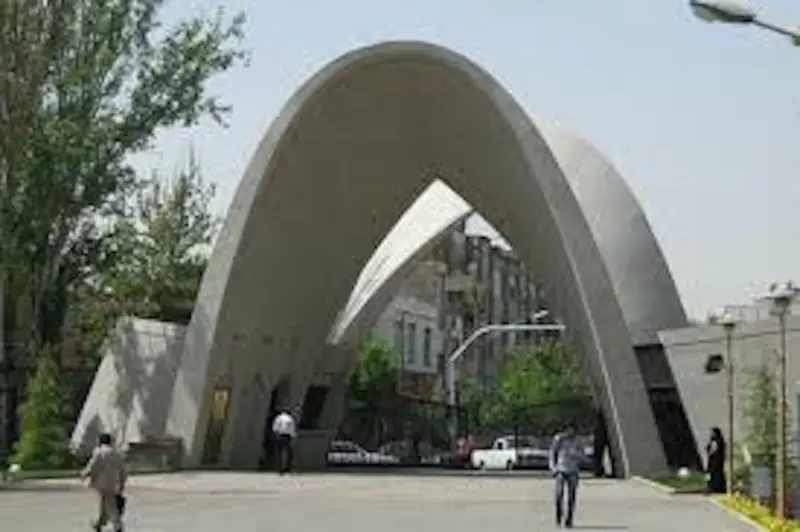
In addition to damage to the country’s infrastructure, an unknown number of workers and engineers have also been killed and injured during these brutal attacks. The attacks by the American and Israeli enemies are not limited to industrial facilities but have also included industrial and vocational universities that are the basis for training our country’s specialists and artisans. In the early hours of Saturday, March 28, several parts of the Iran University of Science and Technology were targeted [iii]. Two days earlier, a professor at the same university was targeted in his home in Chizar and killed along with two of his children.
These attacks reflect the truth that we have been warning about since the beginning of this war and have called on our compatriots to be vigilant. Despite the claims of Western officials and a faction of political activists in the country, this war is not only about the Islamic Republic’s excessive ambitions regarding nuclear energy and the interventionist policies of its leadership in the region. And despite calls from the likes of Pahlavi and ambitious people inclined to him for the Israeli regime and American forces to assassinate and “precise targeting,” in which university professors and technical experts in the country are not exempt, our enemies are bent on destroying the country’s infrastructure.
In these attacks on industries and universities, the target is not the Iranian government. Rather, the unstated target is Iran’s industrial independence itself. To prove this statement, we need to go back in time. As Ali Kadivar writes: “In 1941, Allied forces invaded a neutral country during the war, deported its engineers, looted its factories, and intercepted and confiscated Iranian industrial machinery at sea—all to ensure that Iran could not build and produce on its own terms.” [iv]
In 1938, Iran contracted with the German consortium Demag-Krupp to build a steel complex in Karaj. When the Allies invaded in 1941—driving out the Germans whose presence in Iran had been cited as the justification for the complex—they seized the factory equipment on site and confiscated the machinery that was still at sea.
In 1953, Britain and the United States overthrew Mohammad Mossadegh, the elected prime minister of Iran, and restored Mohammad Reza Shah—a puppet of theirs, installed by the CIA and MI6 at Western expense. But even so, in 1959 and 1961, the World Bank, at the behest of the United States, rejected the Shah’s request for a bank loan to build the facility[v]. When there was no Islamic Republic, no nuclear program, or an axis of resistance, only a Shah who owed his throne to Washington and London would ask for help to build a steel plant and his request would be rejected. The message was clear: “Western support for Iran was not only conditional on political obedience, but also on adherence to dictated economic strategies for assembly lines. Kneeling was not enough; stopping “industrial ambitions” was the real precondition for Western support.
Because of this non-dependence, Iran has been able to achieve self-sufficiency in various industrial facilities. The expansion of higher education, which is also reflected in the emergence of universities and technical schools throughout the country, is part of the infrastructure for the country’s industrial development. The targeted University of Science and Technology of Iran is today one of the top 400 universities and higher education institutions in the world and ranks third in the country. In 2025, the university’s aerospace school was able to put its first self-made telecommunications satellite into orbit with a Russian Soyuz rocket.
According to international law (the Geneva Conventions and customary law), civilian targets cannot be targeted in war. This includes universities and most industrial facilities. Universities, like schools and civilian industries, are also covered by these safeguards, unless they are engaged in the production of military ammunition and equipment. A deliberate attack on these purely civilian sites is considered a war crime.
The People’s Fadaian Organization of Iran (Majority) condemns the barbaric attacks of Israel and the United States on the country in the strongest terms. As an organization defending the rights of workers and toilers, our anger and hatred are especially great for attacks on infrastructure belonging to all the sons and daughters of our homeland. These facilities were built under crippling sanctions by the capable hands of Iranian workers, toilers, students, entrepreneurs, and scientists, and belong to all the people of Iran.
The prolongation of the war due to the imbalance of power between the two sides and the uncertainty of its continuation and the extent of damage to the country’s infrastructure is to the detriment of our people. We call for an immediate ceasefire and an end to the war based on agreements resulting from negotiations between the parties. These negotiations, which are undeniably necessary, must continue until a lasting agreement is reached and lead to the creation of objective and executive guarantees to abandon the conflict, prevent repeated aggression, preserve and protect national sovereignty, and preserve the territorial integrity of Iran.
End this devastating war!
Executive Political Board of the People’s Fadaian Organization of Iran(Majority)
Monday, March 30, 2026
[۱] ibid
[۱] https://www.bbc.com/persian/articles/cx2r03ey2wwo
[۱] https://open.substack.com/pub/alikadivar/p/the-factory-was-always-the-target?
[۱] ibid